
Tajweed for Beginners: Where to Start
Tajweed is giving every letter of the Qur'an its right. You do not need every rule at once: start with the letters and where they are pronounced, then the long vowels, then noon and meem sakinah, and learn each one by listening to a teacher.
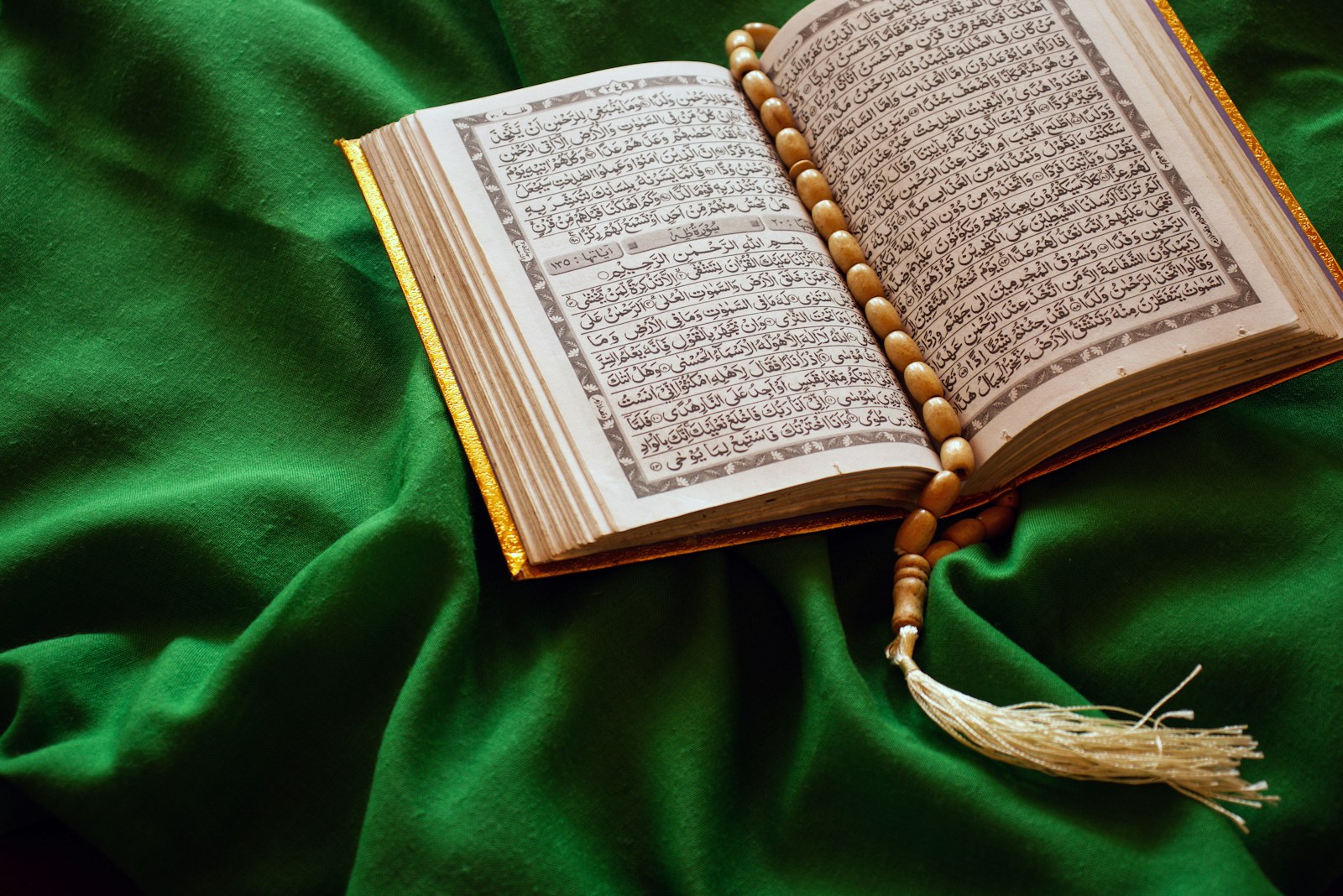
If you have ever listened to a skilled reciter and wondered how every letter sounds so clear and so measured, the answer is tajweed. The word comes from an Arabic root meaning "to make good" or "to do well". In recitation it means giving every letter its right: pronouncing it from its proper place, with its proper qualities, and applying the rules that come into play when letters meet.
From the outside it can look like a large subject. It becomes manageable once you take it in the right order.
وَرَتِّلِ الْقُرْآنَ تَرْتِيلًا
"And recite the Qur'an with measured recitation." (Surah al-Muzzammil 73:4)
Why tajweed matters
The Qur'an was revealed in Arabic and recited to the Prophet ﷺ by the angel Jibril. The Prophet ﷺ taught it to his Companions in the same way, and it has been passed from teacher to student ever since, in an unbroken chain. Tajweed is how that recitation is preserved.
It also protects the meaning. Arabic has sounds that are close to each other but not the same, and mixing them up can change a word entirely. Qalb (قلب) is a heart; kalb (كلب) is a dog. The only difference is where one letter is pronounced.
Step 1: the letters and where they come from
Every letter has a makhraj, the point where its sound is made. Scholars of tajweed group these into five general areas:
- the empty space of the mouth and throat, where the long vowels are sounded;
- the throat, with its six letters: ء ه ع ح غ خ;
- the tongue, which produces more letters than any other area;
- the lips;
- the nasal passage, where the humming sound called ghunnah is made.
A primer such as the Noorani Qaida takes you through the letters one at a time, then joined letters, then short words. It is worth finishing properly: a beginner who knows the letters well learns every later rule faster.
Step 2: short and long vowels
The short vowels, fathah, kasrah and dammah, are sounded briefly. When one is followed by its matching letter of lengthening (alif, ya' or waw), the sound is held for two counts. This natural lengthening, madd tabi'i, runs through almost every line of the Qur'an. Keeping its length steady, neither clipped nor stretched, is one of the first things a teacher will listen for.
Step 3: noon sakinah and tanween
A noon with a sukun (نْ), or the doubled vowel called tanween, changes depending on the letter that follows it. There are four rules:
- Izhar (clarity): before the six throat letters, the noon is pronounced clearly.
- Idgham (merging): before the letters of يرملون, the noon merges into the next letter, with a ghunnah before four of them: ي ن م و.
- Iqlab (changing): before ب, the noon turns into a meem sound, held with a ghunnah.
- Ikhfa' (hiding): before the remaining fifteen letters, the noon is hidden, with a ghunnah.
Step 4: meem sakinah
A meem with a sukun (مْ) has three rules of its own, all named after the lips:
- Ikhfa' shafawi: before ب, the meem is hidden, with a ghunnah.
- Idgham shafawi: before another م, the two merge into one doubled meem, with a ghunnah.
- Izhar shafawi: before every other letter the meem is pronounced clearly, and with particular care before و and ف.

Learn it from a teacher
Books explain the rules; the ear and the tongue learn them from a person. Tajweed has always been taught by talaqqi: the teacher recites, the student repeats, and the teacher corrects until the sound is right. A good teacher hears mistakes you cannot yet hear yourself.
And if progress feels slow, take heart from the words of the Prophet ﷺ:
"The one who is skilled in the Qur'an will be with the noble and righteous scribes, and the one who recites the Qur'an and stumbles over it, finding it difficult, will have two rewards." (Sahih Muslim 798)
A simple weekly plan
- Every day, 15 to 20 minutes: practise the rule you are on, using the short surahs of the last juz'.
- Once or twice a week: recite to your teacher and write down every correction.
- At the end of each week: go back over the corrections before moving on to anything new.
At the Risalah Academy, complete beginners start with Al Qaeda Al Nourania, and those who can already read move on to Quran Tajweed. If you are not sure where you fit, book an assessment from the Academy page and a teacher will suggest the right starting point.